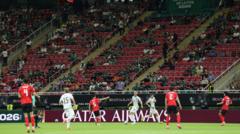
The recent Group A match between South Korea and the Czech Republic has sparked controversy over the visibility of empty seats, despite being a near-sell-out event. According to Fifa, the governing body of international football, the empty seats were not a result of poor ticket sales, but rather due to fans choosing to remain on concourses instead of taking their seats.
Fifa's claim suggests that many spectators preferred to stay in the concourse areas, where they could socialize, grab a bite to eat, or simply enjoy the atmosphere, rather than sitting in their designated seats. This behavior is not uncommon, especially in high-energy events like the World Cup, where the excitement and camaraderie of being among fellow fans can be just as appealing as watching the game itself. However, it does raise questions about the effectiveness of stadium design and crowd management strategies.
The issue of empty seats at major sporting events is not unique to the World Cup, and it is often a topic of discussion among organizers, teams, and fans. While it may seem counterintuitive that fans would choose not to sit in their seats, it highlights the complexities of creating an engaging and enjoyable experience for spectators. Fifa and stadium authorities may need to reassess their approaches to crowd management and stadium design to ensure that fans are encouraged to take their seats and enjoy the game.
As the World Cup continues, it will be interesting to see if this trend persists and how organizers respond to it. The tournament is a showcase of the world's best football, and the atmosphere in the stadiums is a crucial part of the experience. By understanding the reasons behind the empty seats and addressing the needs of fans, Fifa and stadium authorities can work towards creating a more engaging and enjoyable experience for everyone involved.


Comments (0)