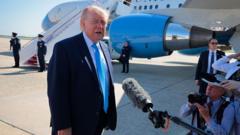
The United States may be on the cusp of a significant shift in its diplomatic approach to Taiwan, as President Trump has indicated a willingness to engage in talks with the island nation's leader. This move would mark a departure from long-standing protocol, which has seen the US tread carefully in its interactions with Taiwan in order to avoid antagonizing China. The suggested talks come at a time of heightened tension between the US and China, with the two global powers locked in a struggle for influence and economic dominance.
The potential talks between Trump and Taiwan's leader are likely to be closely watched by China, which views Taiwan as a renegade province and has long been wary of any moves that could be seen as legitimizing the island's independence. The US has historically maintained a delicate balance in its relations with Taiwan, providing the island with military support and economic aid while stopping short of formal diplomatic recognition. However, the Trump administration has signaled a desire to strengthen ties with Taiwan, and the suggested talks could be seen as a key step in this process.
The development also comes as the US weighs whether to proceed with a $14 billion arms sale to Taiwan, a move that would likely be strongly opposed by China. The proposed sale has been the subject of intense debate, with some arguing that it is necessary to help Taiwan maintain a credible defense against Chinese aggression, while others have expressed concerns about the potential for escalation. As the US considers its next move, the suggested talks between Trump and Taiwan's leader could provide a crucial indicator of the administration's intentions and may have significant implications for the future of US-Taiwan relations.
The potential consequences of the suggested talks are far-reaching, and could have a major impact on the delicate balance of power in the region. If the talks were to proceed, they could be seen as a significant breakthrough in US-Taiwan relations, and may pave the way for increased cooperation and collaboration between the two nations. However, they could also be met with fierce opposition from China, which may view the move as a challenge to its sovereignty and a threat to regional stability. As the situation continues to unfold, it remains to be seen how the US, Taiwan, and China will navigate this complex and sensitive issue.



Comments (0)